How Robotics Help Businesses Scale
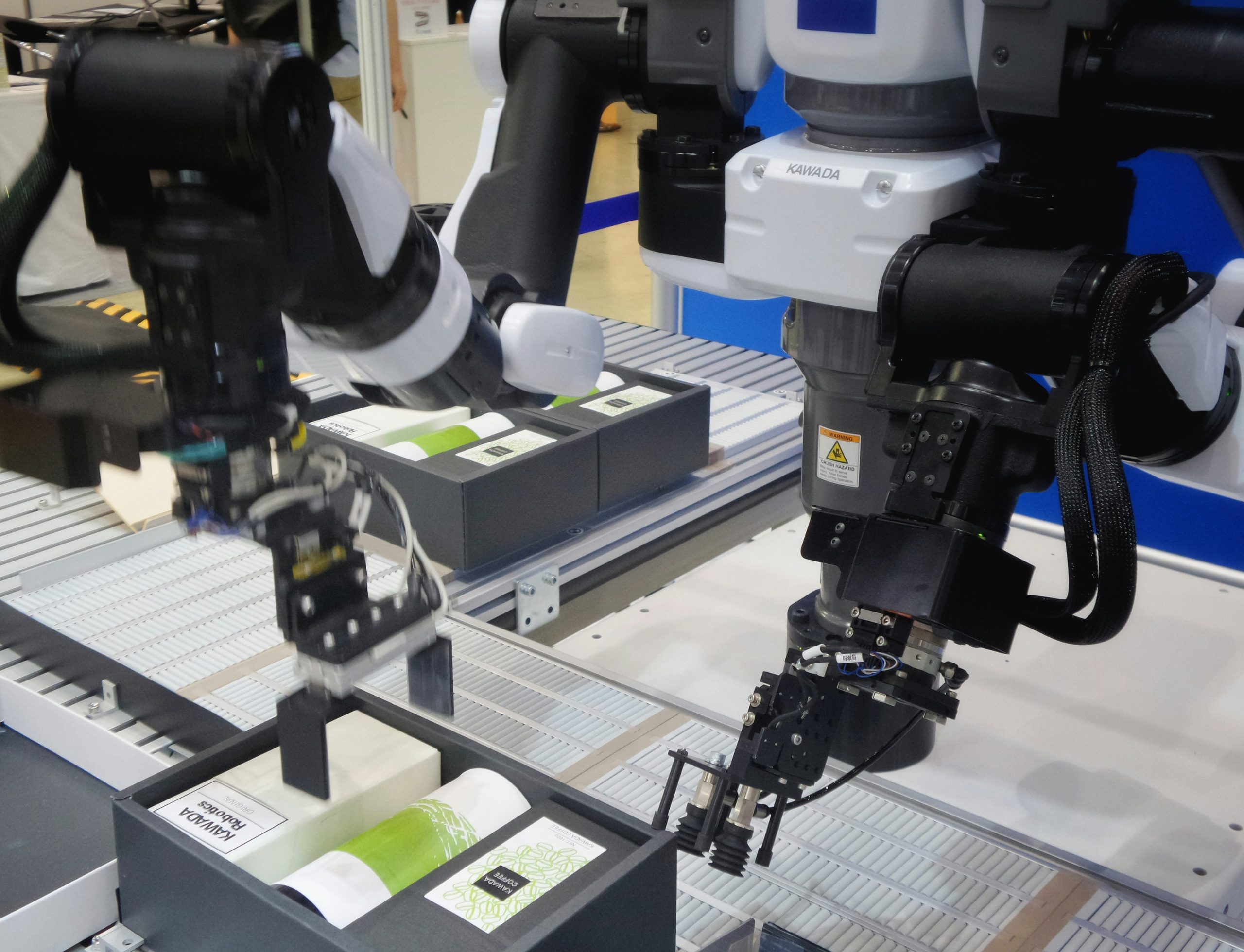
Robotics refers to programmable machines designed to perform defined tasks with high levels of speed, accuracy, and repeatability. These systems operate according to programmed instructions and are widely used in environments that require consistent and predictable output.
As businesses grow, the volume of operations and the complexity of processes increase. Managing higher demand often places pressure on labour resources, production timelines, and quality control. Robotics provides a structured way to increase operational capacity while maintaining consistency across processes.
What Is Business Scalability?
Scalability refers to the ability of a business to increase output while maintaining stable margins and consistent quality. Organisations that rely heavily on manual processes often encounter limitations when demand increases rapidly.
Hiring additional staff may not always be feasible within required timeframes. Labour shortages can slow production, while expanding headcount significantly increases operating costs. In high pressure environments, error rates also tend to rise when manual tasks exceed optimal capacity.
Maintaining consistency across shifts and locations becomes increasingly difficult as operations expand. Without structured systems, process variability can grow as teams interpret procedures differently or work under time pressure.
Increasing Operational Capacity Without Proportional Cost Growth
Robotic systems are capable of performing repetitive or high volume tasks at stable and predictable cycle times. Unlike manual operations, robotic processes do not experience fatigue, allowing them to maintain consistent performance throughout extended production periods.
Automation also allows operations to continue beyond standard working hours without requiring additional overtime expenditure. Businesses can therefore expand production capacity without proportionally increasing labour costs.
In environments facing labour shortages, robotics provides a reliable alternative for maintaining output levels. When demand increases suddenly, businesses can absorb the additional workload through system capacity rather than urgent recruitment or temporary labour arrangements.
Improving Consistency and Quality Control
Maintaining product quality during rapid growth can be difficult when processes rely heavily on manual execution. Robotics introduces controlled and repeatable execution, which helps maintain precision over long production runs.
Robotic systems are capable of maintaining tight tolerances and consistent handling across thousands of repeated cycles. This level of repeatability reduces the likelihood of human error, which often increases during periods of operational pressure.
As a result, defect rates decline and the need for rework is reduced. Consistent execution also supports standardised quality levels when businesses expand operations into additional facilities.
Enhancing Workforce Productivity
Automation does not remove the need for human involvement. Instead, it changes how employees contribute within operational environments.
When repetitive tasks are automated, employees can focus on supervisory roles, system monitoring, and process optimisation. These responsibilities typically generate higher value compared to manual repetition.
Collaborative robots also enable humans and machines to work within shared spaces. These systems assist with lifting, positioning, or repetitive motions while workers focus on tasks that require judgement or decision-making.
Workplace safety improves as robotics handles physically demanding or hazardous tasks. Reduced exposure to these conditions can lower workplace injury rates and improve overall workforce stability.
Accelerating Time to Market
Production delays often occur when certain stages of a process become bottlenecks. Tasks such as assembly, material handling, and inspection can slow down production when handled manually at scale.
Robotics reduces these bottlenecks by maintaining consistent throughput across operational stages. Automated systems can process materials and components continuously, which helps stabilise production timelines.
Modern robotic systems also support flexible configurations, allowing manufacturers to switch between product variants with reduced downtime. Integration with planning and scheduling systems further improves coordination between production and order fulfilment.
This combination allows businesses to respond more quickly to market demand and shorten the time required to deliver products to customers.
Enabling Data Driven Decision-Making
Robotic systems continuously generate operational data. Metrics such as cycle times, throughput rates, and system utilisation provide clear visibility into production performance.
This data allows organisations to identify inefficiencies and performance bottlenecks more accurately. Patterns in downtime can be analysed and traced to specific causes.
Predictive maintenance systems use operational data to anticipate potential equipment failures before they occur. Maintenance activities can then be scheduled proactively, which reduces unplanned stoppages and production interruptions.
Data collected from robotic systems also supports more informed decisions regarding capacity expansion and operational planning.
Supporting Multi Site Expansion
When businesses expand into new locations, maintaining consistent operational standards can be difficult. Differences in workforce training, local procedures, and facility layouts can introduce variability.
Robotic systems provide a standardised framework that can be replicated across facilities. Once an automated configuration has been validated, it can be deployed in multiple locations with minimal variation.
Centralised monitoring systems also allow companies to oversee operations across several plants or warehouses. This improves visibility and coordination within distributed production networks.
Standardised robotic workflows also reduce the variability that can occur during employee training across different sites.
Cost Structure Optimisation
Automation changes the cost structure of operations. Instead of relying primarily on variable labour costs, businesses shift part of their operational expenditure towards predictable capital investment.
Although robotics requires upfront implementation costs, long term operational expenses often become more stable and measurable. Defect related losses decline as processes become more controlled.
Precise robotic handling reduces material waste, particularly in industries that require accurate placement or portioning. Energy usage can also be monitored and optimised more effectively within automated environments.
These factors collectively contribute to improved cost control as operations scale.
Industry Use Cases
Robotics is widely used across industries that require high volume, precision driven processes.
Manufacturing facilities deploy robotics for tasks such as assembly, welding, painting, and surface finishing. These applications require consistent positioning and repeatable movements.
Warehousing and logistics operations increasingly rely on robotics for picking, sorting, and palletising goods. Automation in these environments improves order processing speed and reduces manual handling.
Healthcare organisations use robotics for laboratory automation and surgical procedures that require high precision.
Food processing environments also apply robotics for portioning, packaging, and visual inspection, particularly in high throughput production lines.
Implementation Considerations
Successful robotics deployment requires careful planning and process evaluation. Businesses must first identify tasks that involve stable demand patterns and repeatable operational steps.
Process mapping helps determine where automation can deliver the most operational impact. Tasks that involve high volume repetition often produce the strongest return on investment.
Many organisations adopt a phased deployment strategy. This allows systems to be introduced gradually while reducing disruption to existing operations.
Workforce training is also essential for long term success. Employees must understand how to operate, monitor, and maintain robotic systems to ensure stable performance.
Conclusion
As businesses grow, operational pressure increases across cost control, product quality, and delivery timelines. Manual processes alone may struggle to support sustained expansion under these conditions.
Robotics provides a structured method for increasing capacity while maintaining consistent execution. Through controlled automation, organisations can stabilise operations, improve productivity, and scale production more effectively.
Long term success depends on thoughtful integration of robotic systems within broader operational strategy. When implemented correctly, robotics becomes a key enabler of sustainable business growth.
About the Author
Benjamin Richard
Senior Content Writer and Strategist with 10+ years of experience across the SaaS, technology, web3, and manufacturing industries.