9 Myths and Misconceptions About Robotics
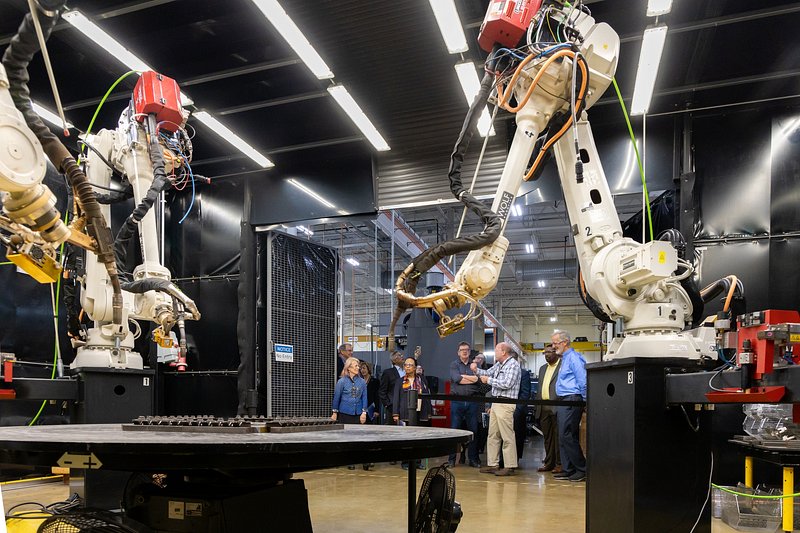
Robotics adoption is often shaped by legacy perceptions rooted in early industrial automation. During that period, systems were expensive, rigid, and largely confined to large-scale manufacturing environments. Many current concerns still reflect those conditions, despite substantial advances in cost, flexibility, and deployment models. As a result, misconceptions can delay decision-making or lead organisations to approach automation in ways that are either overly cautious or poorly structured.
Misconceptions and Myths About Robotics Adoption
Several widely held beliefs about robotics originate from earlier generations of technology that required heavy investment and offered limited adaptability. Today, improvements in artificial intelligence, sensing capabilities, and system design have expanded both accessibility and practical use cases. Re-evaluating these assumptions allows organisations to assess robotics based on current capabilities rather than outdated constraints.
Myth 1: Robotics is only for large enterprises
The perception that robotics is limited to large enterprises stems from a time when systems required significant capital expenditure and specialised infrastructure. That landscape has shifted, with modern robotics becoming more accessible to a wider range of organisations.
Modular robotic systems and standardised components have lowered the barrier to entry, making adoption feasible for small and medium-sized enterprises. In addition, robotics-as-a-service and leasing models allow businesses to spread costs over time rather than committing to large upfront investments. Adoption is now visible across sectors such as logistics and light industrial operations, where smaller organisations are integrating robotics into specific workflows.
Myth 2: Robots replace human workers entirely
Concerns about job displacement are often overstated and tend to overlook how robotics is actually deployed in practice. Most implementations focus on automating repetitive, physically demanding, or hazardous tasks rather than replacing entire roles.
This shift changes the nature of work rather than removing it. Employees are typically redeployed into roles involving supervision, maintenance, and operational decision-making. In industries facing persistent labour shortages, robotics is often introduced to sustain output rather than reduce workforce size.
Myth 3: Implementation is too complex
Earlier robotics deployments were associated with significant engineering effort, long timelines, and high technical barriers. This has contributed to the perception that implementation remains difficult and resource-intensive.
Modern systems are increasingly designed for usability, with improved interfaces and compatibility with existing operational tools. Vendors frequently provide end-to-end support, including setup, training, and maintenance. While more advanced applications can still involve complexity, many entry-level deployments are far more straightforward than commonly assumed.
Myth 4: Robotics is only useful in manufacturing
Robotics continues to be strongly associated with manufacturing, particularly in automotive and heavy industry. This perception persists despite the expansion of robotics into other sectors.
Today, robotics is widely used in logistics, healthcare, agriculture, and retail. Applications include warehouse automation, surgical assistance, crop monitoring, and inventory management. The growth of service robotics demonstrates that its value extends well beyond traditional production environments.
Myth 5: Robots cannot adapt to changing environments
Traditional industrial robots were designed to operate in fixed and controlled settings, which contributed to the perception that robotics lacks flexibility. This limitation has been reduced through technological advancement.
Modern robots increasingly incorporate machine vision, advanced sensors, and artificial intelligence, allowing them to respond to variations in their environment. Autonomous mobile robots can navigate dynamic spaces such as warehouses without fixed paths. While adaptability varies depending on the system, rigidity is no longer a defining characteristic.
Myth 6: The return on investment is unclear
Uncertainty around return on investment often arises when robotics is considered without a clearly defined application. Poorly scoped implementations can make value difficult to measure.
When applied to suitable use cases, robotics can deliver measurable improvements in throughput, accuracy, and cost stability. Payback periods are often achieved within a few years in high-volume environments. Additional benefits such as consistency, scalability, and resilience further strengthen long-term value.
Myth 7: Maintenance and downtime are too risky
Earlier robotics systems required specialised maintenance and offered limited visibility into system performance. This contributed to concerns about downtime and operational risk.
Modern robotics systems incorporate predictive maintenance capabilities supported by sensors and data analytics. Issues can often be identified before failure occurs, allowing for planned intervention. Remote monitoring also reduces the need for on-site troubleshooting. In many cases, downtime risk becomes more manageable and comparable to manual operations.
Myth 8: Robotics requires a complete operational overhaul
There is a common assumption that adopting robotics requires a full redesign of existing operations. This perception can discourage organisations from exploring automation.
In practice, robotics can be introduced incrementally, starting with targeted tasks that offer clear efficiency gains. Pilot programmes allow organisations to validate performance and return on investment before expanding deployment. Integration strategies increasingly focus on working within existing workflows rather than replacing them entirely.
Myth 9: Safety concerns limit practical use
Safety concerns have historically been a major barrier, particularly when robots operated separately from human workers. Advances in collaborative robotics have addressed many of these risks.
Modern systems are designed with built-in safety features such as force limitations, sensors, and real-time monitoring. International safety standards provide clear guidelines for safe deployment. When implemented correctly, robotics can reduce workplace injuries by taking over physically demanding or hazardous tasks.
Adopt Robotics Into Your Operations with Zetrix
Misconceptions often present a greater barrier to robotics adoption than the technology itself. Addressing these challenges requires a structured approach that focuses on identifying practical use cases and implementing solutions in a controlled manner.
Zetrix’s robotics team works with businesses to evaluate opportunities, design deployment strategies, and integrate automation into existing operations. This enables organisations to adopt robotics incrementally, reduce implementation risk, and build scalable systems that support long-term operational efficiency.
About the Author
Benjamin Richard
Senior Content Writer and Strategist with 10+ years of experience across the SaaS, technology, web3, and manufacturing industries.