Robotics in the Automotive Industry
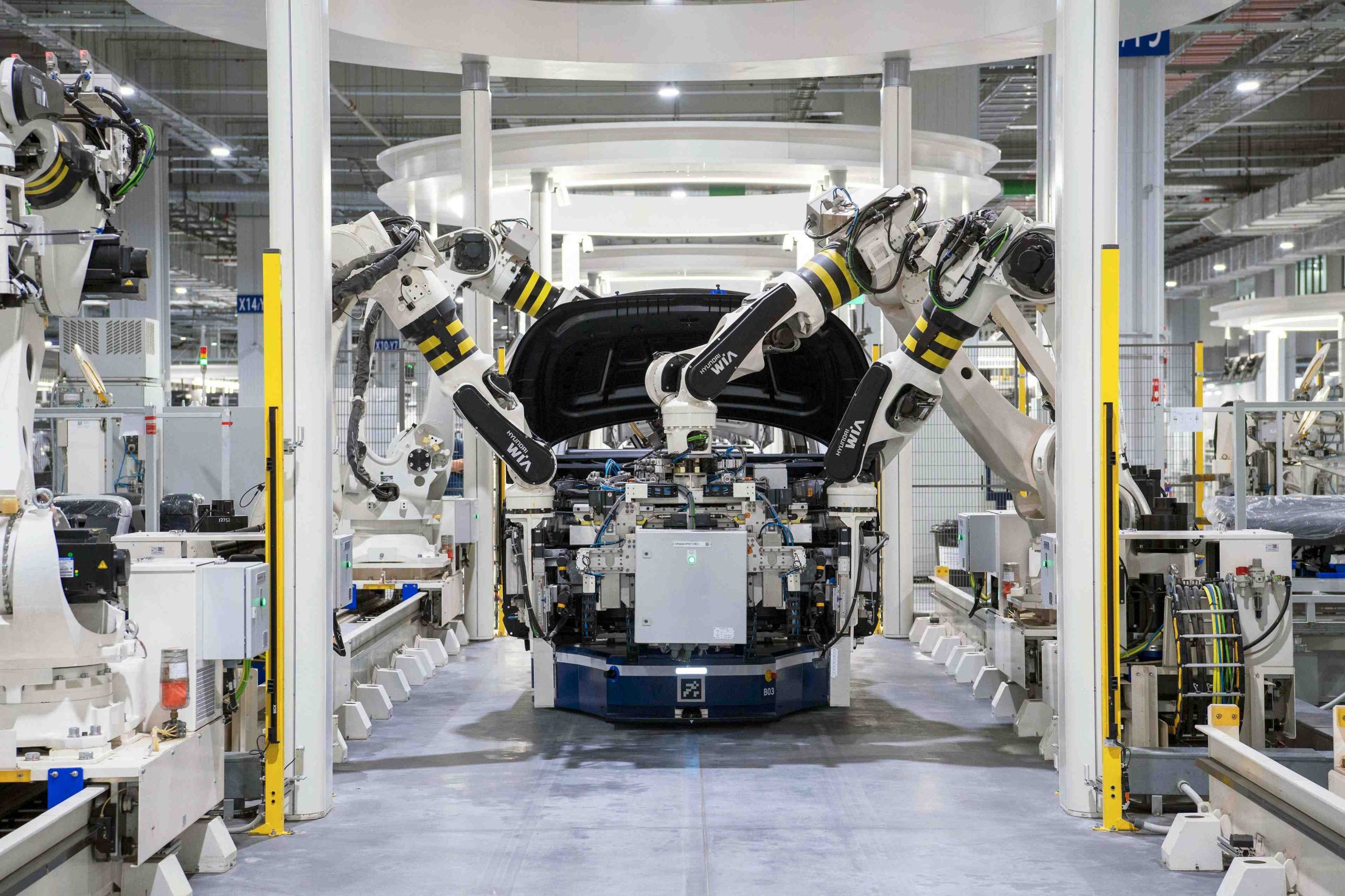
The automotive sector was one of the earliest adopters of robotics, laying the foundation for modern automated production lines. As vehicle manufacturing scaled globally, the need for uniformity and efficiency made robotics a practical necessity rather than an optional upgrade.
Today, the automotive industry remains the largest user of industrial robots. Robotics has become a core component of vehicle production, enabling manufacturers to meet global demand while maintaining strict quality standards.
What Are Industrial Robotics?
Industrial robotics refers to programmable machines designed to perform repetitive, precise, and high-volume tasks in manufacturing environments. These systems are engineered to operate with a level of consistency and speed that is difficult to achieve through manual labour alone.
The Role of Robotics in Automotive Manufacturing
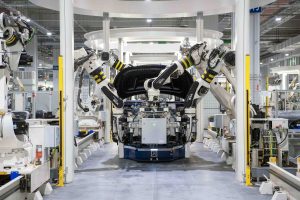
Robotics is integrated across multiple stages of the production lifecycle, from initial body construction to final assembly. These systems handle repetitive and physically demanding tasks, reducing reliance on manual labour for routine operations.
By automating key processes, manufacturers can achieve high-speed production while maintaining uniformity across large volumes of vehicles. Robotics also supports just-in-time manufacturing by improving workflow efficiency and reducing bottlenecks across production lines.
Key Applications of Robotics in the Automotive Industry
Welding
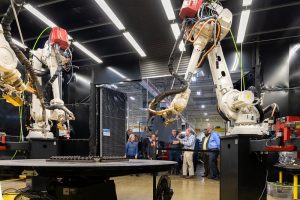
Welding is one of the most common applications of robotics in automotive manufacturing. Robots perform spot and arc welding in body assembly with high precision, ensuring structural integrity across all units.
These systems can operate continuously in high-temperature environments, making them well suited for tasks that would otherwise pose safety risks to human workers.
Painting and Coating
Robotic painting systems are used to apply coatings evenly across complex vehicle surfaces. This improves consistency in finish quality while reducing material waste.
Automation in painting also allows for better environmental control, particularly in managing overspray and emissions within controlled facilities.
Assembly Operations
Robots are widely used in assembly processes, including the installation of components such as doors, dashboards, and windshields. Their precision improves the accuracy of part fitting and reduces assembly errors.
By automating repetitive assembly tasks, manufacturers can increase production speed while maintaining consistent quality across units.
Material Handling and Logistics
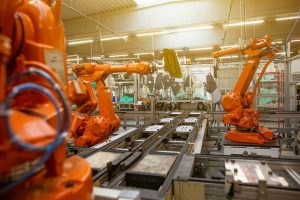
Robotics plays a key role in moving materials within automotive facilities. Robots transport heavy components such as engines and chassis, while autonomous mobile robots streamline internal logistics.
This reduces delays in production flow and minimises the physical strain placed on workers.
Inspection and Quality Control
Machine vision systems are used to inspect components and finished vehicles for defects. These systems can detect inconsistencies that may not be visible to the human eye.
As a result, manufacturers can maintain strict quality standards and reduce the likelihood of costly recalls or rework.
Machine Tending and Processing
Robots are also used to load and unload CNC machines and perform processing tasks such as cutting, trimming, and polishing. These systems enable continuous operation with minimal downtime, improving overall production efficiency.
Types of Robots Used in Automotive Manufacturing
Several types of robots are commonly used across automotive production environments. Articulated robotic arms are widely deployed for welding, painting, and assembly tasks due to their flexibility and range of motion.
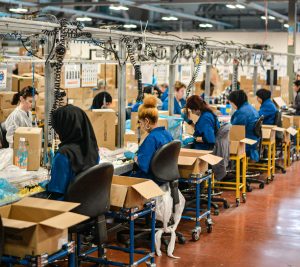
Collaborative robots, or cobots, are designed to operate alongside human workers in shared environments. They are typically used for tasks that require a combination of precision and adaptability.
Autonomous mobile robots and automated guided vehicles are used for material transport within facilities. In addition, specialised robots are deployed for inspection, testing, and precision handling tasks.
Benefits of Robotics in the Automotive Industry
Increased Efficiency and Productivity
Robotics accelerates production timelines by enabling faster cycle times and higher output capacity. These systems can operate continuously without fatigue, allowing manufacturers to maintain consistent production levels.
Improved Quality and Precision
The high repeatability of robotic systems reduces variation in manufacturing processes. This leads to fewer defects and ensures consistent standards across all production units.
Enhanced Workplace Safety
Robotics removes workers from hazardous tasks involving heat, chemicals, and heavy loads. This reduces workplace injuries and contributes to safer production environments.
Cost Reduction Over Time
While initial investment can be high, robotics reduces long-term labour costs for repetitive processes. It also minimises waste, rework, and operational inefficiencies.
Flexibility and Scalability
Robotic systems can be reprogrammed to accommodate different vehicle models. This allows manufacturers to scale operations without proportional increases in workforce requirements.
Challenges of Implementing Robotics
Despite its advantages, implementing robotics presents several challenges. The upfront investment in equipment and system integration can be significant, particularly for smaller manufacturers.
There is also a need for skilled personnel to manage, maintain, and optimise robotic systems. Integrating robotics into existing legacy infrastructure can be complex, especially in facilities that were not originally designed for automation.
In addition, robots may have limitations when handling highly customised or variable production tasks that require human judgement.
Emerging Trends in Automotive Robotics
AI-Driven Robotics
Artificial intelligence is increasingly being integrated into robotic systems to enable real-time decision-making and process optimisation. This includes predictive maintenance, which helps reduce unexpected downtime.
Collaborative Robotics
Collaborative robots are becoming more common in production environments. They allow for closer interaction between humans and machines, supporting more flexible manufacturing processes.
Smart Factories and Industry 4.0
Robotics is a key component of smart factory initiatives. Integration with IoT and data-driven systems enables real-time monitoring and control of production environments.
Electric Vehicle (EV) Manufacturing
The shift towards electric vehicles is introducing new production requirements. Robotics is adapting to handle the complexity and precision needed for battery systems and electronic components.
How Zetrix Supports Robotics Implementation
Robotics adoption in automotive manufacturing requires more than equipment. It depends on proper system design, deployment, and integration within existing operations.
Zetrix provides robotics solutions that help businesses automate repetitive and labour-intensive processes. This includes identifying suitable areas for automation and implementing systems that align with current production workflows.
By focusing on practical use cases, Zetrix supports improvements in efficiency, consistency, and throughput. Its approach to integration ensures that robotic systems operate reliably within existing environments.
This allows businesses to reduce dependence on manual labour while maintaining production quality and scalability as operations grow.
About the Author
Benjamin Richard
Senior Content Writer and Strategist with 10+ years of experience across the SaaS, technology, web3, and manufacturing industries.